Before ordering continuous row LED lighting, confirm the system as a coordinated assembly—not a length of luminaire plus loose accessories. The practical answer is to issue a dimensioned run drawing, mark every corner, junction and feed, and require the supplier to document mechanical and electrical limits for that exact configuration. Do not rely on a universal maximum run length or generic wiring instructions; confirm the selected system’s limits and installation requirements in writing before release.
Lock the run drawing before pricing
A layout sketch is not enough. Ask for a run drawing showing start and end points, wall or ceiling datum, straight sections, corner type, junction locations, feed positions, suspension points, and access requirements. Dimension from fixed references, not “site measure later.”
Corners and junctions
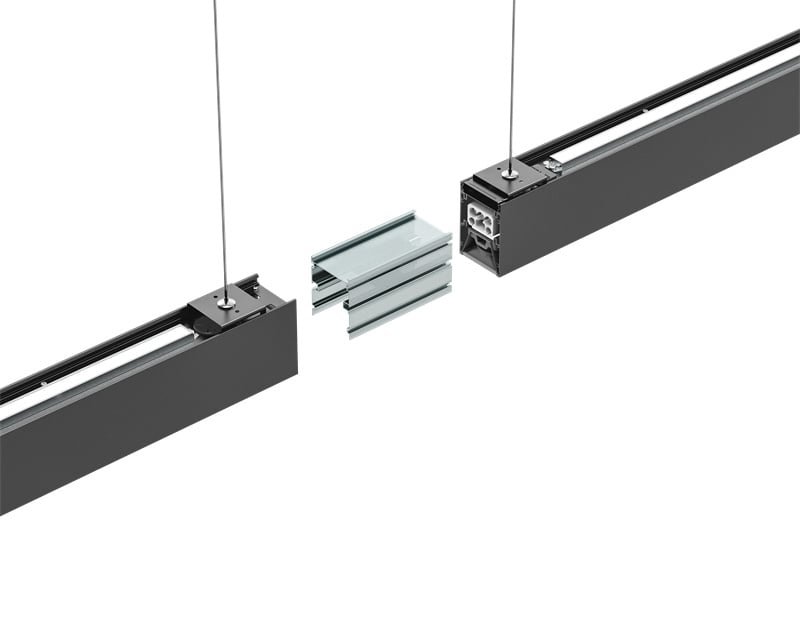
Confirm whether corners are square, radiused, illuminated, or blank; how the lens and finish transition; and whether junction boxes, connectors, or remote components sit inside or outside the visible run. Ask for a detail drawing of every unique junction, not only a typical straight section.
Feed positions
Mark whether each run is end-fed, mid-fed, or dual-fed and which control zone it belongs to. Feed position affects connector orientation, driver location, isolation, and future access. Confirm who supplies and installs feeders, and whether feed components must align with the ceiling grid.
Get documented limits for the chosen system
Ask the supplier to state, in writing, the mechanical and electrical limits for the proposed configuration: maximum continuous length per assembly or jointing method, support spacing, expansion and contraction provisions, connector current limits, voltage-drop guidance, and any restrictions on mixed lengths or finishes. These are configuration-specific; there is no single universal run length. Treat verbal “it will be fine” statements as unresolved.
Coordinate suspension, access and components
Match suspension points to the actual ceiling substrate, grid module, and services. Confirm hanger type, anchor responsibility, adjustable tolerance, and whether the luminaire can be leveled after installation. Provide access for drivers, connectors, sensors, and end caps; do not bury serviceable parts behind fixed ceiling finishes. On long runs, agree how joints will be inspected and how damaged sections can be isolated or replaced.
Use a component schedule
Request a line-by-line schedule: luminaire sections, corners, junction kits, end caps, lenses, drivers, connectors, mounting brackets, sensors or controls, and labels. It should show quantities, part references, feeder side, and which items are supplied by the luminaire supplier versus others. Cross-check it against the run drawing before approving the order.
Buyer checklist before release
- Dimensioned run drawing, elevations, and reflected ceiling plan aligned.
- Every corner and junction detailed, with finish and lens continuity confirmed.
- Feed positions, control zones, and driver access marked.
- Written mechanical and electrical limits for the exact configuration.
- Suspension type, substrate, adjustment range, and installation responsibility agreed.
- Service access and replacement strategy accepted by the installer.
- Component schedule reconciled with drawings and quantities.
- Interface points with other trades listed, including feeders and controls.
- Delivery split and site handling sequence confirmed against access constraints.
- Approved submittal and marked-up drawings issued before order release.
Three FAQs
Can we order one continuous length with no joints?
Only if the supplier’s documented limits and transport/site access allow it. Ask for the proposed jointing method, section lengths, and handling plan; do not assume a single length is available.
Who decides feed position?
The project design team should set it with the supplier and installer, because feed position drives connector orientation, driver access, and control zoning. Get it marked on the approved drawing.
Which omissions should buyers check for?
Missing junction details and unclear responsibility for feeders, anchors, or access. Resolve these before price comparison rather than after order placement.
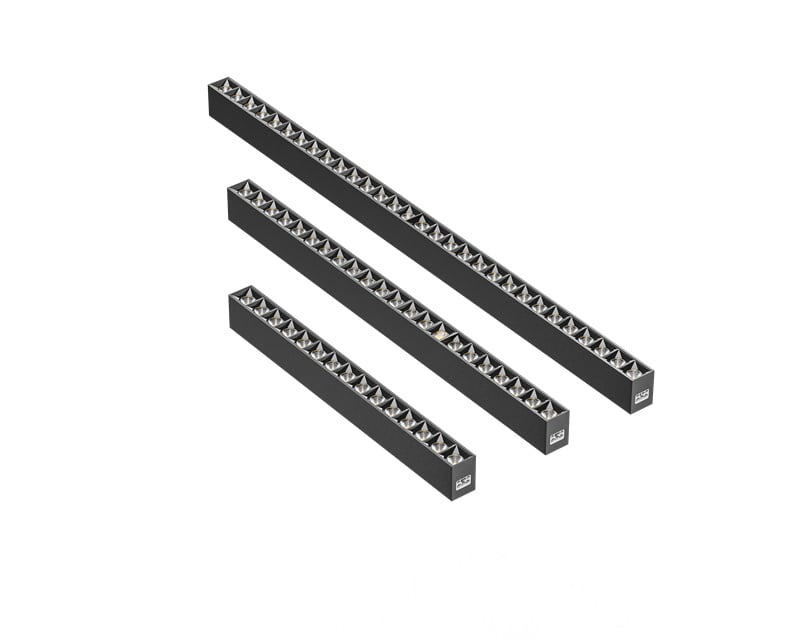
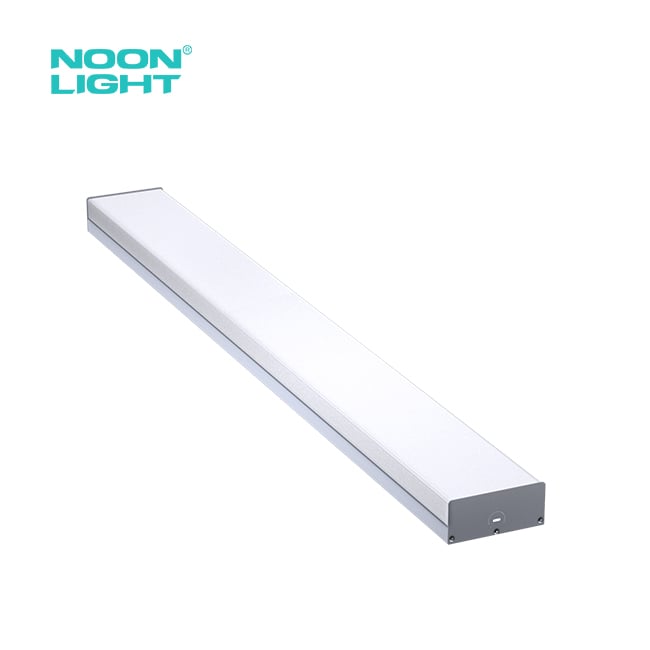
Review Noon Lighting’s LED linear light trunking systems when preparing your product shortlist.
Send Noon Lighting a project brief with the run drawing, feed and control zones, ceiling type, access constraints, and required component schedule. Ask which configurations and supporting documents are available for review before ordering.

 EN



 Hot News