The most useful way to plan LED linear lighting for offices is to begin with the work, not the luminaire. Map focused tasks, collaborative zones and circulation areas, then choose linear geometry, mounting, optics and controls that support those activities without glare, clutter or awkward coordination. Ask suppliers for photometric evidence and compatibility answers before you fix a schedule.
Start with layout goals, not a generic grid
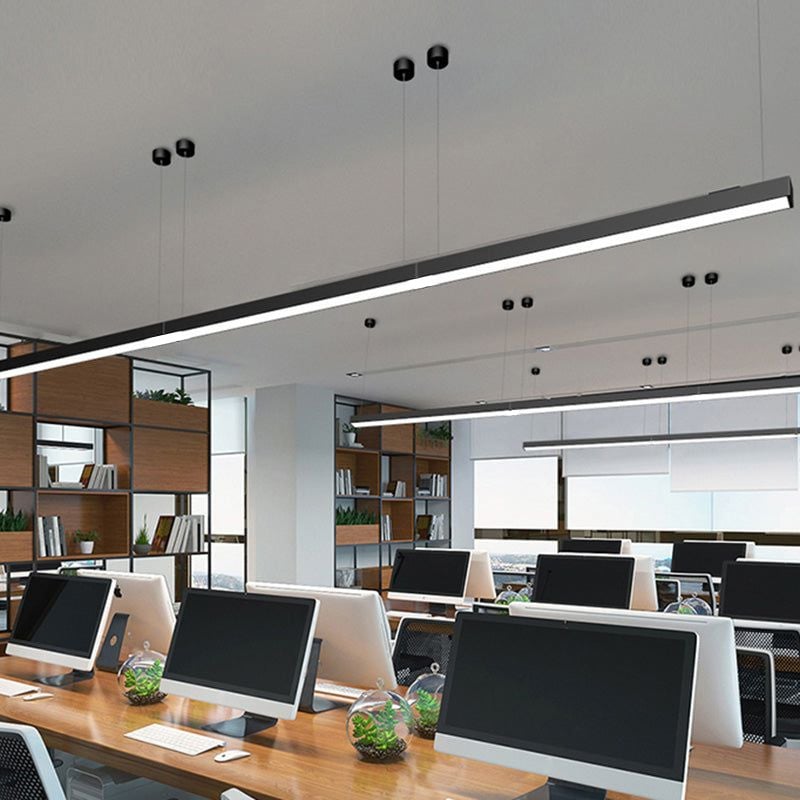
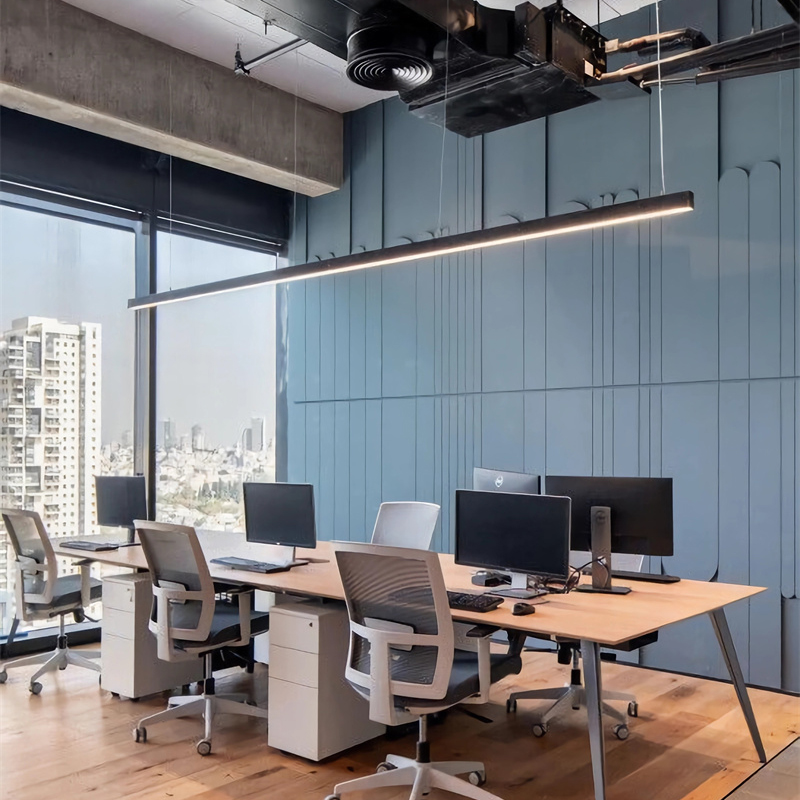
Office lighting layouts should reinforce how the space is used. Continuous linear runs can organise desks and meeting areas, but they also need clear termination points, clean ceiling alignment and coordination with air diffusers, sprinklers, sensors and partitions. Decide whether lines should follow desks, walls, circulation routes or architectural features. Avoid treating any spacing or illuminance figure as universal; the right answer depends on task, surface reflectance, ceiling height, furniture and control strategy. Ask the supplier to explain how their offering supports the layout you have drawn, rather than forcing your plan into a standard template.
Design for visual comfort
Visual comfort belongs in the specification from the start. Consider glare control, uniformity across desks and vertical brightness for faces and screens. Check colour consistency across a run, dimming behaviour at low output and flicker risk with the proposed driver. Linear luminaires should read as one continuous element where that is the design intent, with no obvious colour shift or shadow gaps between sections. Where a space has mixed tasks, ask for a layer-by-layer review rather than one average figure.
Mounting and coordination
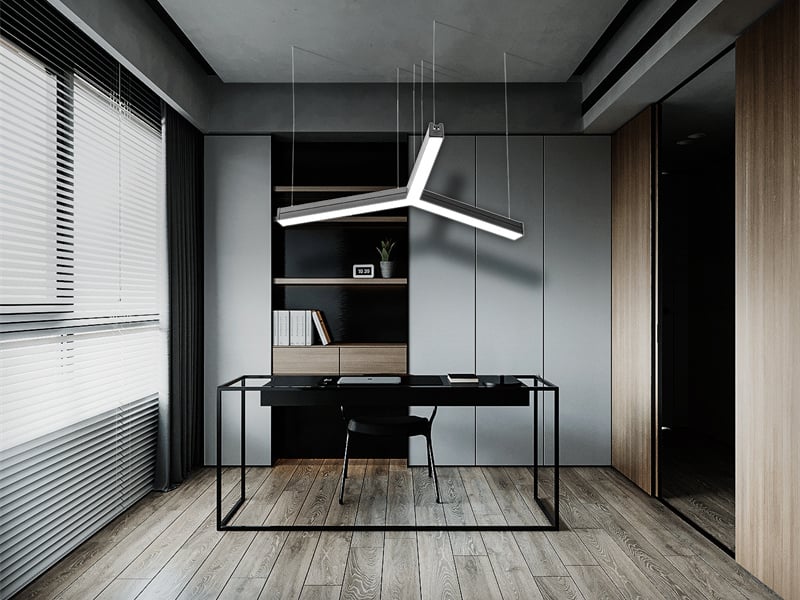
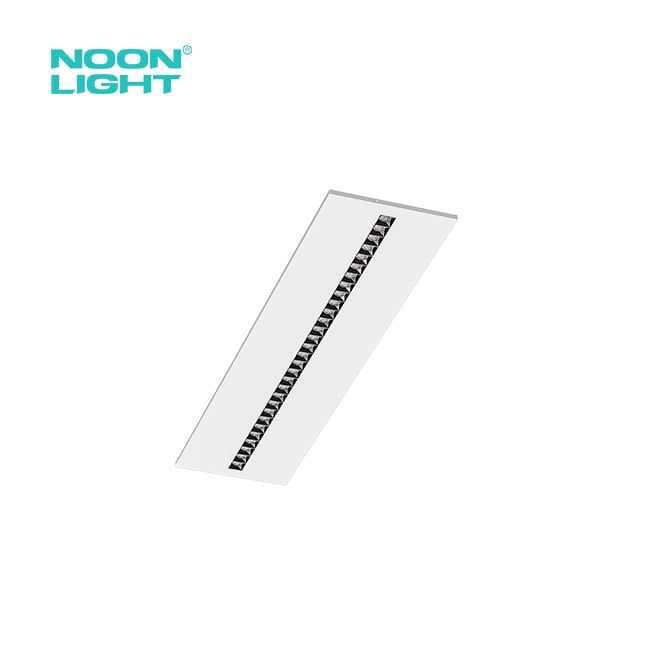
Mounting choice affects both appearance and service access. Pendant, surface, recessed and wall-wash versions each create different ceiling relationships, so confirm trims, suspension details, ceiling type and maintenance access early. Coordinate linear runs with structural grids and other services before ordering. Ask: what mounting options are available for this ceiling? How are joints and end caps finished? What access is needed for drivers and controls? These questions keep the installation predictable without assuming a single universal detail.
Controls compatibility
Plan controls alongside the luminaires. Confirm that luminaires, drivers and sensors are compatible with the intended control approach, including dimming, occupancy and daylight response where specified. Ask the supplier: which control protocols are supported? Are drivers factory-matched or field-selectable? What commissioning information is provided? Can the same family be used across different zones? Test a representative sample before full release. Site-specific electrical design and wiring should be handled by the appointed electrical professional.
Ask for photometric evidence
Request application-relevant photometric files and reports, not just a product image. Review intensity distribution, glare data, colour consistency and the assumptions behind any calculation. Check that the submitted file matches the exact variant, optic and driver. Ask: can you provide photometric files for the specified configuration? What assumptions sit behind the layout calculation? How does the product perform at the dimmed levels we intend to use? This evidence lets distributors, contractors and specifiers compare options on a common basis.
Buyer’s checklist
- Confirm task zones, furniture layout and ceiling conditions.
- Review linear geometry, joints, end caps and finish samples.
- Check glare, uniformity and vertical illumination expectations.
- Match mounting detail to ceiling type and service access.
- Verify driver and controls compatibility, including dimming.
- Obtain photometric files for the exact specified variant.
- Ask about sample availability, documentation and commissioning support.
- Record clarifications and exclusions before purchase.
FAQs
Can LED linear lighting suit both open desks and meeting rooms?
Often, but the layout, optics, mounting and controls should be reviewed by application. A meeting room may need different glare control and control zoning from an open desk area.
What should a distributor request first?
Start with the layout intent, ceiling details and control strategy, then ask for photometric evidence for the exact variant. Compatibility questions should be answered in writing.
How can specifiers compare suppliers fairly?
Use the same layout brief, request comparable photometric files and ask each supplier the same mounting, controls and documentation questions. Avoid relying on headline claims alone.
Explore Noon Lighting’s LED linear light trunking systems as a starting point for product discussions.
Talk to Noon Lighting
Send Noon Lighting your reflected ceiling plan, furniture layout and target lighting brief through the contact page. Ask for a photometric and controls compatibility review before you finalise your specification.

 EN



 Hot News