Start by comparing every warehouse high bay proposal against the lighting task at the working plane. Define the target illuminance and uniformity, map racking and aisles, then test the photometric evidence, glare control, controls, maintenance access and total installed cost.
Define working-plane needs before reviewing fixtures
Ask each bidder to state the maintained illuminance and uniformity they are designing for, the calculation grid, reflectance assumptions, mounting height and aiming used, and any task areas that need higher or vertical light. Confirm whether picking faces, loading areas, inspection zones and aisle floors have different requirements. Require a calculation that uses your actual building and racking layout, not a generic rule of thumb. The decision criterion is whether the proposal meets the agreed working-plane brief under the stated assumptions.
Check racking, aisles and future flexibility
Warehouse lighting is a layout problem as much as a fixture problem. Ask: Will luminaires run over aisles, over rack tops or over picking faces? Do rack uprights and beams create shadows at the working plane? Can the layout accommodate a future rack change without a full redesign? Compare proposals on their ability to light both floor and vertical surfaces where people work and look. Ask bidders to show aisle-by-aisle coverage and any dark zones between rows.
Require photometric files you can verify
Request IES or LDT files for the exact configuration offered, plus the calculation report and luminaire schedule. Check that file names, product options and quantities match the proposal. Confirm the calculation uses your racking and aisle geometry, correct mounting conditions and agreed maintenance factors. If a bidder supplies only a catalogue page or a fixture count, the proposal is not yet comparable. A photometric file you can open and test is a practical decision criterion.
Review glare where people look
High bay lighting can create glare for forklift drivers, pickers and inspectors. Ask for glare control options and a review at typical viewing angles in the aisles. Consider whether workers look up at rack faces, down aisles or toward loading doors. Compare diffuser, reflector or shielding options only after confirming they suit the application and environment. Glare control should be visible in the layout and selection, not left to a datasheet claim.
Match environment and controls
Document ambient temperature, dust, moisture, washdown, corrosive atmosphere and vibration risks, then ask each supplier to confirm the offered environmental rating and evidence. For controls, define zoning, occupancy and daylight strategy, dimming range, emergency interface and who commissions the system. Ask which protocols the controls use and how they integrate with existing building systems. Confirm all options with the supplier in writing before approval.
Plan access and compare total project costs
Ask how each fixture will be installed, reached for cleaning and replaced without disrupting operations. Include lifts, scaffolding, rack access, spare parts, commissioning, controls integration and future maintenance in the comparison. Compare total installed cost on a like-for-like scope: fixtures, controls, installation, commissioning, spares and access. Do not accept a unit price comparison that excludes these items. Confirm performance assumptions, options and scope with the supplier before you commit.
Buyer checklist
- Target illuminance, uniformity and vertical needs agreed at the working plane.
- Photometric file matches the exact offered configuration.
- Calculation uses actual racking, aisle and mounting conditions.
- Glare reviewed at typical viewing angles and work positions.
- Environmental conditions documented and suitability confirmed with the supplier.
- Controls scope, protocols and commissioning responsibility defined.
- Maintenance access and spare-part plan priced.
- Total installed cost compared on the same scope and assumptions.
FAQs
What should I compare first in a warehouse high bay proposal?
Compare the working-plane calculation and photometric file against your actual racking and aisles before comparing fixture counts.
Are photometric files essential for every bid?
Yes. Ask for files for the exact configuration offered and a calculation that reflects your layout and agreed assumptions.
How do controls change the selection?
Controls affect zoning, dimming, commissioning and integration scope. Define the control sequence and responsibilities before comparing costs.
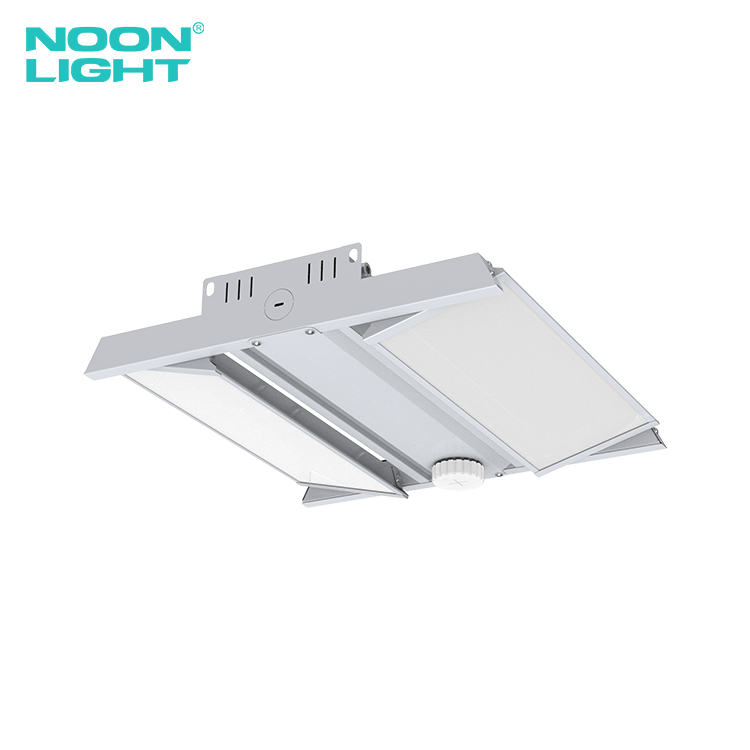
Review Noon Lighting’s LED linear high bay lights when preparing your product shortlist.
Send Noon Lighting your project brief with building dimensions, racking layout, lighting criteria, environment, controls and access constraints so suitable options can be confirmed with your team.

 EN



 80) | Minimize Stock with 1 SKU Coverage">
 Hot News