Start with the installation environment, not the product name. “Vapor tight LED lighting” describes a fixture style; it does not by itself prove suitability for a specific room, wash-down routine, dust level or cable layout. For commercial procurement, define the conditions first, then ask the supplier to match a model and its documentation to those conditions.
Define the operating environment
Write down where the luminaire will sit and what happens around it:
- Moisture: condensation, drips, low-pressure hose cleaning, or occasional splashes?
- Dust: routine airborne dust, fibrous dust, or buildup on the housing?
- Cleaning: dry wipe, damp wipe, foam, or directed water? Which chemicals?
- Temperature and ventilation: ambient highs/lows and heat from process equipment
If the answer includes immersion, corrosive chemicals, flammable atmospheres or direct food contact, stop and route the query to a specialist. A general vapor tight fixture is not the right default.
Seals, cable entry and materials
Seals
Ask what seal material is specified, how it is compressed, and what maintenance is needed. Check gasket condition, lens seal, end caps and any breather or pressure-equalization detail. A gasketed cover is not enough if the cable entry is open.
Cable entry
Confirm entry type, gland or conduit arrangement, cable diameter range, strain relief and whether entries are factory-sealed or field-installed. Ask how many entries are needed and whether unused entries must be closed with suitable components. Cable entry is often the weak point in wet or wash-down areas.
Material compatibility
Match housing, lens and seal materials to the cleaning agents and temperature. Ask the supplier for compatibility guidance for the actual cleaning method. Do not assume a generic “chemical resistant” label covers every cleaner.
Model-specific documentation
A product name alone is not an environmental rating. Request the datasheet, installation instructions and certification or test documentation for the exact model and configuration you will buy. Confirm the rating applies to the complete assembled fixture, including cable entries, accessories and mounting. Ask whether field modifications affect compliance. Keep the approved configuration in the project record.
Buyer’s checklist
- Environment brief: moisture source, dust type, cleaning method and frequency, ambient temperature and any chemical exposure.
- Fixture rating: exact model, lens, housing, seal and cable-entry configuration linked to the environment.
- Seal inspection: gasket material, compression, replacement interval and service access.
- Cable entry: gland/conduit type, cable range, strain relief, unused-entry closure and installation responsibility.
- Materials: housing, lens and seal compatibility with cleaners and temperatures. Ask for written guidance.
- Documentation: datasheet, installation sheet, certification/test evidence and approved options list for the exact SKU.
- Maintenance: cleaning procedure, inspection points, spare seals or entry components, and who can service the fixture.
- Commercial clarity: approved configuration, quantities, packaging, labeling and change-control process — confirm with supplier, not assumptions.
FAQs
Is “vapor tight” the same as a wet-location rating?
No. Vapor tight is a fixture description; wet-location suitability is a model-specific rating. Ask for the exact documentation for the fixture and installation you plan to use.
Can I use a vapor tight LED fixture in a wash-down area?
Only after matching the cleaning method, water pressure, chemicals, cable entry and seal system to the supplier’s model-specific guidance. If wash-down includes immersion or aggressive chemicals, use a specialist product.
What should I send to get a useful quotation?
Send a project brief: room conditions, cleaning routine, mounting height, cable entry needs, ambient temperature, quantity and required documentation. That lets the supplier confirm options rather than guess.
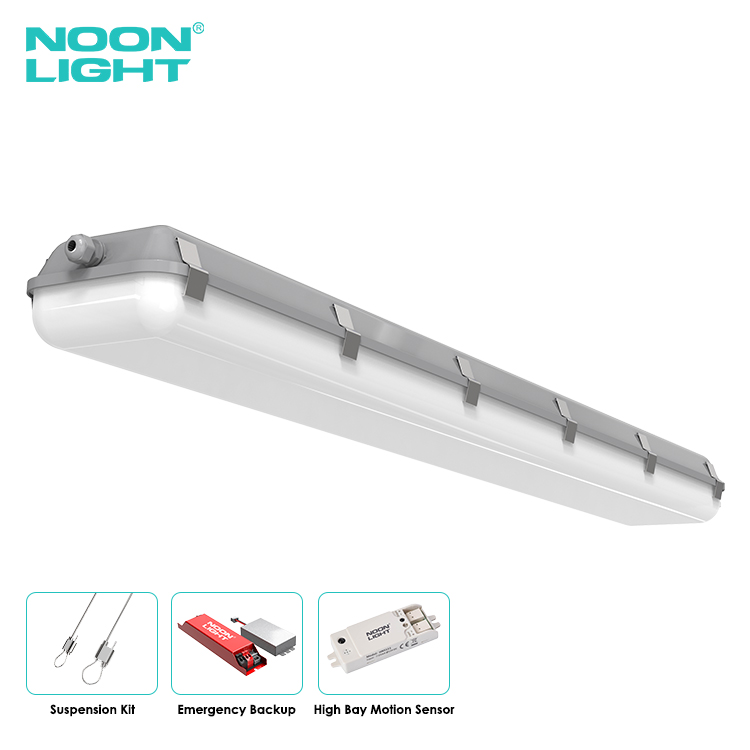
Review Noon Lighting’s LED vapor tight fixtures when preparing your product shortlist.
Need a practical shortlist? Contact Noon Lighting with your project brief and ask for model-specific documentation and options to confirm. Confirm environmental suitability for the exact configuration before ordering.

 EN




 Hot News