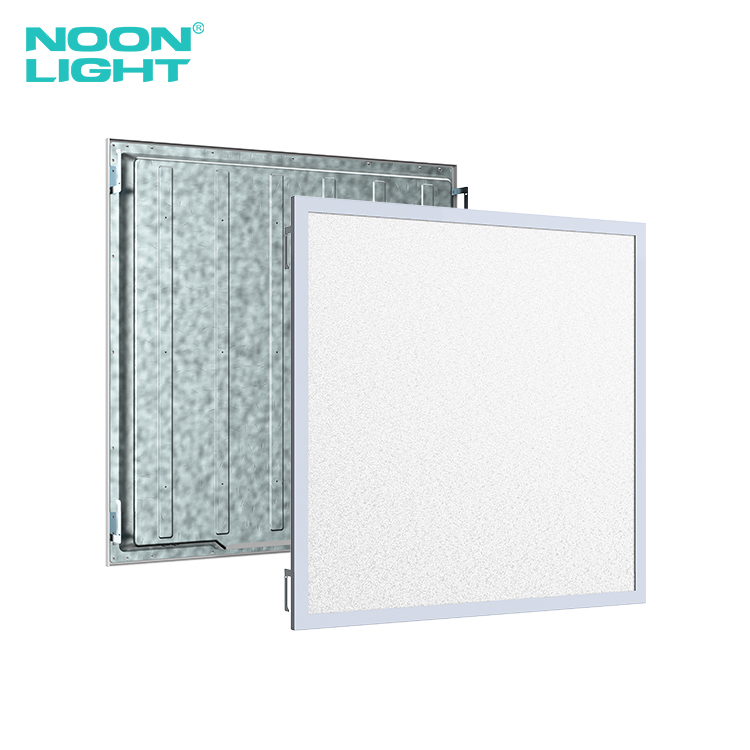
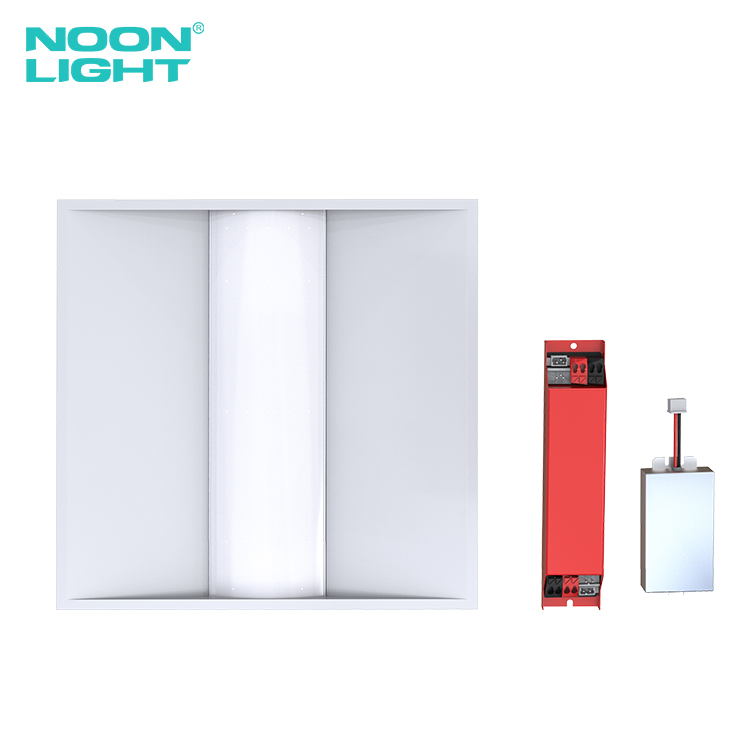
For a new commercial ceiling project, the useful answer is this: compare the proposed LED panel light and LED troffer as ceiling components, not as generic product labels. A panel is normally a flat, lay-in or surface module with a luminous face; a troffer is normally a recessed grid fixture with a housing and aperture. Neither category guarantees better optics, glare control, efficiency or service access. The LED panel light vs troffer decision should be based on drawings, photometric evidence and the exact options offered by the supplier. Category labels do not guarantee performance.
Form and ceiling interface
Start with the ceiling. Is the project using a suspended grid ceiling, a solid ceiling or a surface-mount arrangement? A lay-in panel and a recessed troffer may both fit a module grid, but their depth, weight, trim and plenum demands can differ. Ask for dimensioned drawings, mounting details and ceiling load information. On a new project, coordinate fixture depth with ducts, sprinklers, structure and service zones before choosing by appearance alone. A shallow panel may help where plenum is tight; a troffer may offer a different aperture or housing arrangement. Verify the exact option rather than assuming from the category.
Light distribution and visual appearance
Compare layouts under the same room geometry, target light levels and mounting conditions, using photometric files for the exact fixtures proposed. A panel often presents a broad, diffuse face; a troffer may use a reflector, lens or louver to shape distribution. But these are typical tendencies, not rules. For open offices, ask how the fixture controls glare at normal viewing angles and whether the luminous face is evenly lit. For back-of-house or high-ceiling areas, check distribution and spacing criteria rather than face appearance. Ceiling appearance matters: a flat panel reads as a clean luminous rectangle, while a troffer can show a deeper reveal or visible door frame. Mock-ups under project lighting are more reliable than catalogue images.
Maintenance, access and evidence
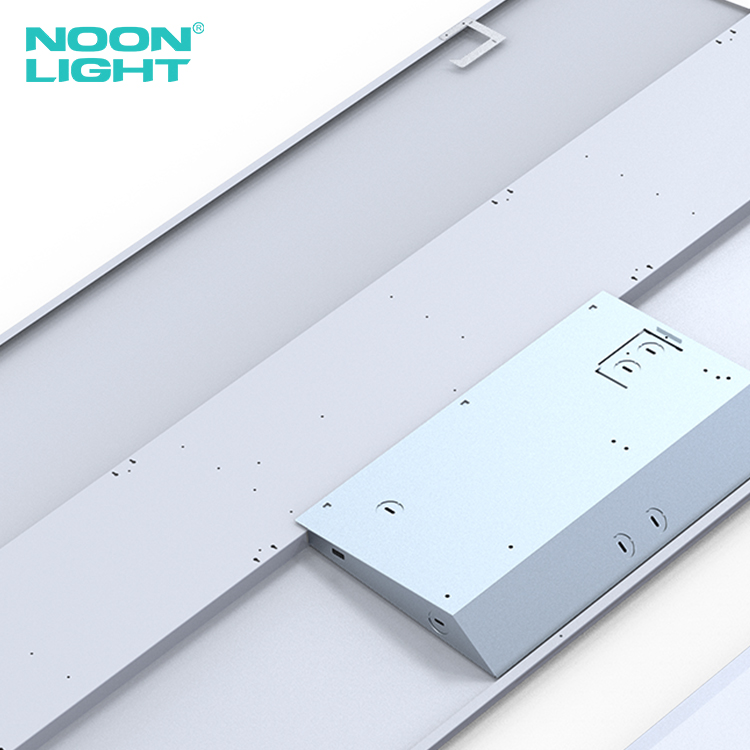
Maintenance planning should begin before the ceiling closes. Ask where the driver or gear tray sits, how it is reached, whether the diffuser or door is removable, and what spare parts are available. For a new build, service access can affect ceiling design and future disruption. Request photometric reports, electrical data, dimensional drawings, installation instructions and compliance documents for the exact variant. Treat marketing descriptions as a starting point; confirm the specified options with the supplier in writing. Compare samples under the same conditions.
Buyer checklist for a new ceiling project
- Confirm ceiling system, module size, recess depth and fixture weight.
- Obtain photometric files for the specified lumen output and distribution.
- Review glare-control evidence and a physical sample at the project viewing angle.
- Check driver location, service access and spare-part route.
- Compare dimensioned drawings, mounting accessories and plenum conflicts.
- Verify colour consistency, dimming compatibility and control interface, if required.
- Collect compliance and test documentation for the exact offered variant.
- Ask the supplier to confirm all options in writing before release.
FAQs
Are troffers always deeper than panels?
No. Depth depends on housing, driver position and optical design. Compare dimensioned drawings for each candidate.
Can a panel light suit a grid ceiling?
Many are designed as lay-in modules, but module size, trim, seismic requirements and plenum space must be verified. Confirm the specific mounting option.
Which gives better glare control?
You cannot decide by category. Compare photometric data, luminance images and samples at the relevant viewing angle.
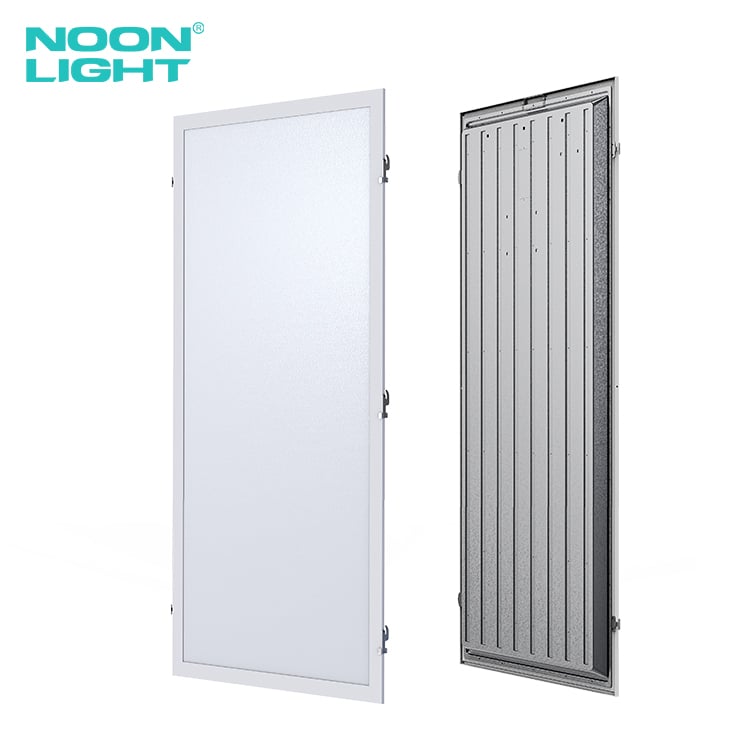
Browse Noon Lighting’s backlit LED panels and LED troffer lights to start your shortlist.
Send a project brief
Contact Noon Lighting with the ceiling type, room use, target light levels, module size, maintenance access and compliance needs. Ask which panel and troffer configurations match your brief and which supporting documents are available.

 EN



 80) | Minimize Stock with 1 SKU Coverage">
 Hot News